Kitchen Design Ideas 2026: Smart, Modern & Space-Saving Kitchens
"I just don't know what to do with my kitchen — it feels dated, cramped, and nothing like the images I save on Pinterest."
I hear this almost every week. Whether it's a client standing in a narrow galley in a city apartment or a family trying to squeeze an island into a suburban kitchen that simply wasn't designed for one, the frustration is real. And I get it — the kitchen is the one room in a home that has to work harder than any other. It's where you cook, eat, argue about who forgot to buy coffee, help kids with homework, and somehow entertain guests at the same time.
The good news? Kitchen design in 2026 has evolved to meet exactly that kind of chaos. The trends this year are refreshingly practical. Less marble-for-marble's-sake, more real-life functionality wrapped in genuinely beautiful design. Whether you're planning a full renovation or just looking for smart, budget-friendly kitchen ideas to refresh what you have, this guide covers everything you need — from small kitchen design tricks that actually work, to the modern kitchen styles reshaping interiors right now.
Let's get into it.
Key Takeaways
- Small kitchens can feel spacious with the right layout, lighting, and cabinetry strategy
- 2026's biggest kitchen trend is "warm minimalism" — clean lines with natural, tactile materials
- Kitchen islands are still in demand, but smart, movable versions work better for smaller homes
- Open kitchen concepts are evolving — semi-open layouts offer the best of both worlds
- White kitchens aren't going anywhere, but they're getting warmer and more textured
- Budget-friendly kitchen upgrades can have just as much visual impact as a full remodel
Small Kitchen Design Ideas That Actually Make a Difference
Does your kitchen feel like you can barely turn around without bumping into something?
You're not alone. Small kitchens are one of the most searched design challenges online — and for good reason. In cities especially, you're often working with under 100 square feet and a layout that was designed decades before anyone invented the modern coffee station. I've worked with kitchens as narrow as 5 feet across, and I promise you — space is a mindset as much as it is a measurement.
Work with the Triangle, Not Against It
The kitchen work triangle — the relationship between your sink, stove, and refrigerator — is the invisible architecture of every kitchen. In a small space, keeping this triangle tight (ideally under 26 feet combined) reduces fatigue and wasted movement. Many homeowners unknowingly break this when they add appliances in the wrong spots. Before you move anything, trace how you actually move around your kitchen on a busy morning. That will tell you everything.
Go Vertical — Seriously
One of the most underused strategies in small kitchen design is vertical storage. I've seen homeowners stop their upper cabinets at the standard 7-foot height and leave 18 inches of wall between the cabinet top and ceiling completely bare. That space? It's storage gold. Extend cabinets to the ceiling, add a floating shelf above the window, or use a tall larder unit. Suddenly you've added the equivalent of an entire cabinet run without touching your floor plan.
Use glass-fronted upper cabinets in a small kitchen — they reflect light and trick the eye into reading the space as larger than it is. Pair with under-cabinet LED strips for an effect that's both functional and beautiful.
Hanging heavy, dark drapes over kitchen windows in a small kitchen — or skipping a window covering entirely, which creates glare. A simple sheer roman blind in linen lets light filter in while keeping the space feeling soft and curated.
Color Strategy for Small Kitchens
Contrary to what most people assume, dark colors can actually work beautifully in small kitchens — but only when used intentionally. Painting cabinetry in a deep forest green or navy with light countertops creates a jewel-box effect that feels intimate and designed, not cramped. The real mistake is using too many competing colors. Stick to a two-tone maximum: one for cabinets, one for walls, and let your hardware and textiles do the accent work.
Modern Kitchen Trends 2026: What's Actually Happening in Real Homes
I want to be upfront about something: a lot of what gets labeled as "trends" in the design world exists only in luxury showrooms or editorial shoots. I prefer to talk about what's actually showing up in clients' homes — real spaces, real budgets, real lives. And what I'm seeing in 2026 is genuinely exciting.
Warm Minimalism Takes Over
The cold, sterile all-white kitchen with stainless steel everything is fading. In its place: warm minimalism. Think handleless cabinetry in soft clay, greige, or muted sage, paired with honed natural stone, warm wood accents, and matte brushed brass hardware. The look is clean — but it breathes. It feels like a kitchen you'd actually want to spend time in, not a showroom.
Integrated Appliances Are Non-Negotiable
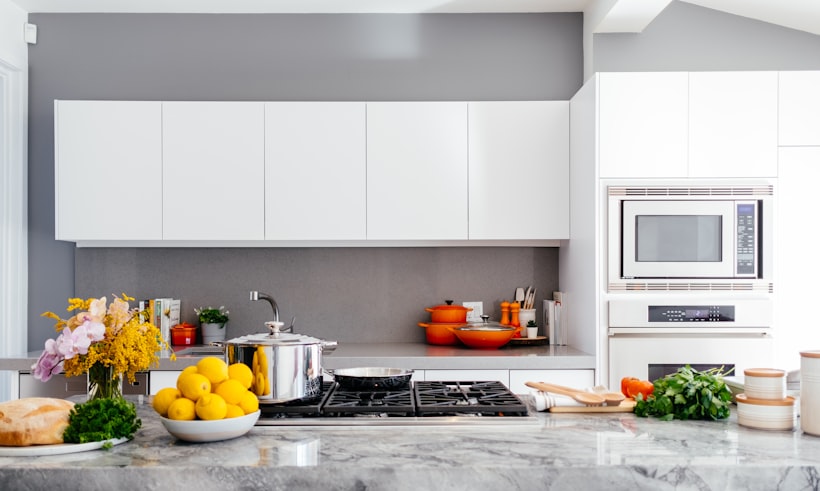
If there's one design decision I push for in modern kitchen renovations, it's integrated appliances. Hiding your dishwasher, fridge, and even microwave behind cabinetry panels creates a seamless, architectural look that elevates even modest budgets. The price difference between a freestanding and integrated dishwasher, for example, is often smaller than people expect — and the visual return is enormous.
Curves Are Back
Sharp 90-degree edges are giving way to softer forms. Curved kitchen islands, arched cabinet openings, rounded shelf edges — this is the organic influence of biophilic design bleeding into the kitchen. It makes the space feel more human and less like a laboratory. You don't need to rebuild everything: even a curved bar stool or a round pendant light can shift the energy of an angular kitchen.
| Feature | Budget Option | Premium Option | Visual Impact |
|---|---|---|---|
| Cabinet hardware | Brushed nickel bar pulls (~$3/each) | Hand-forged brass knobs (~$20/each) | High |
| Countertop | Laminate with stone texture | Honed Calacatta marble | Very High |
| Backsplash | Subway tile in brick bond | Handmade zellige tiles | High |
| Lighting | LED strip under cabinets | Bespoke pendant cluster | High |
| Sink | Stainless undermount | Fireclay farmhouse sink | Medium |
Kitchen Cabinets Design Ideas: Storage, Style, and the Details That Matter
Cabinets are the bones of your kitchen. Get them right, and everything else falls into place. Get them wrong, and no amount of beautiful countertops or fancy pendant lights will save you. I've seen clients spend fortunes on stone and fixtures, only to live with cabinet doors that don't close properly or drawers that bind in humidity. Here's how to avoid that.
Two-Tone Cabinetry: Still the Smartest Move
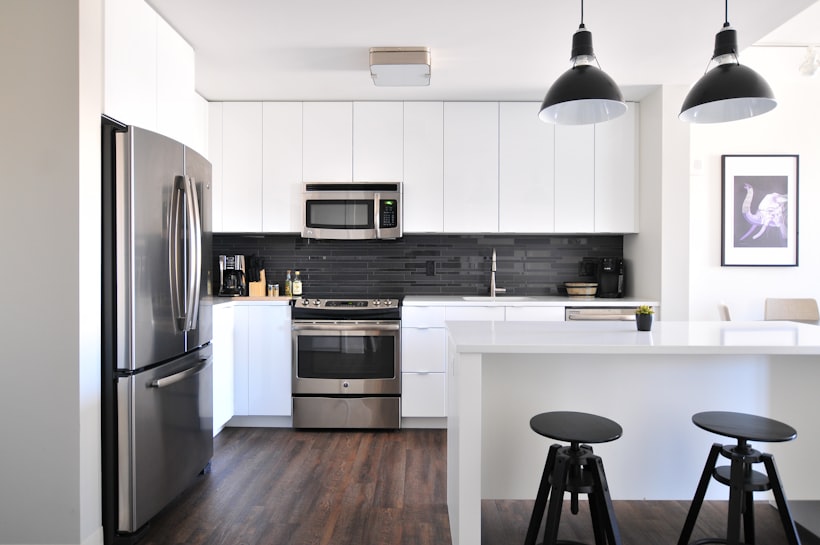
The two-tone kitchen cabinet trend has real staying power because it's genuinely practical, not just aesthetic. Darker lower cabinets hide scuffs and kicks (because yes, everyone kicks their lower cabinets); lighter upper cabinets keep the walls from feeling heavy. Classic combinations in 2026 include warm white uppers with navy lowers, soft cream with forest green, or pale oak with slate gray.
Drawer Banks Over Lower Cabinets
If you're doing a full renovation, I'll always push for full-extension drawer banks over lower cabinets where possible. Being able to see everything in a drawer — pots, pans, food storage — beats crouching to peer into a dark corner cabinet every single time. It's one of those changes that sounds minor until you live with it, and then you wonder how you ever managed without it.
Hardware placement is everything. In handleless kitchens, a recessed J-pull or push-to-open mechanism gives the cleanest look. If you prefer handles, resist the urge to match them perfectly to your taps — a slight contrast (matte black handles with brushed gold taps, for instance) creates a curated, layered look that feels intentional.
Ordering cabinets without accounting for appliance depth. Standard upper cabinets are 12 inches deep, but a large fridge or range hood can project 24–36 inches from the wall. Always model the full kitchen in 3D — even a basic free tool like IKEA's planner will save you from expensive surprises.
Open Shelving: Use It Strategically, Not Everywhere
Open shelving is beautiful in design magazines and relentlessly dusty in real life. My rule: use open shelving for items you reach for every day (coffee mugs, a favourite cookbook, a plant) and keep everything else behind doors. A single run of open shelves above a coffee station or next to your window does more for a kitchen's personality than a whole wall of them.
Kitchen Island Ideas: How to Plan One That Actually Works
Ever wondered why some kitchen islands feel like the heart of the home and others just feel like an obstacle course?
The difference is almost always planning. I've visited renovated kitchens where the island looks magnificent in the photo but leaves barely 30 inches of clearance on each side — the minimum you need to open a dishwasher without asking the person behind you to press against the wall. Islands are one of those design decisions where the details matter enormously.
Minimum Clearance Rules (Don't Skip These)
Before you commit to any island dimensions, measure your clearances. You need a minimum of 42 inches on working sides — 48 inches if two people regularly cook together. On the non-working side (if it's just a seating bar), 36 inches is acceptable. Violate these numbers and your island will become a source of daily frustration, no matter how beautiful the stone top is.
What to Put in Your Island
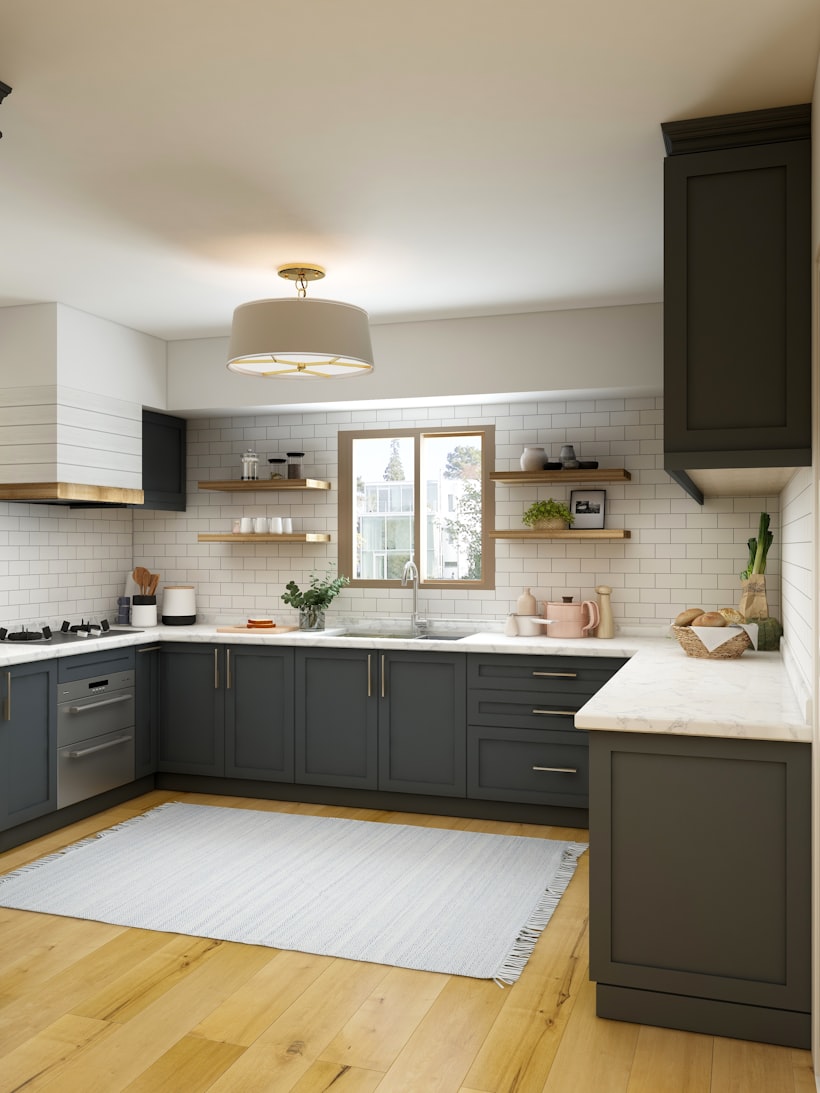
The island isn't just a surface — it's a storage and function opportunity. In my experience, the most useful islands include: a bank of deep drawers on one side (for pots and mixing bowls), at least one shelf for bulky appliances, and a seating overhang of at least 12 inches with a minimum height of 28–30 inches for comfortable stools. If space allows, a prep sink in the island is a genuine game-changer for busy households.
If you can't fit a permanent island, a mobile butcher block cart is one of the most underrated small kitchen ideas. It gives you prep space and storage when you need it, and rolls out of the way when you don't. In a rental where you can't renovate, it's often the single best investment you can make.
The Waterfall Edge Moment
Waterfall countertops — where the countertop material drops straight down the side of the island to the floor — are having a serious moment in 2026. They look architectural and expensive, and when done in a book-matched stone or thick quartz, they genuinely are. The budget-friendly version? A thick laminate edge in a convincing stone texture. The visual effect from across the room is nearly identical.
Open Kitchen Design Ideas: Connection Without Chaos
The fully open kitchen concept — no walls between kitchen and living space — became the dominant layout for new builds and renovations over the past 20 years. And it's wonderful, until it isn't. Because anyone who's cooked a fish curry in an open-plan home knows the moment when that gorgeous connected space becomes a very fragrant living room.
The Semi-Open Kitchen: The 2026 Evolution
What's gaining real traction in 2026 is the semi-open kitchen — where a half-wall, a structural column, or a taller island creates a visual separation between kitchen and living areas without fully closing off the space. You get the light and connection of open plan, with a subtle acoustic and scent buffer that makes a surprising difference to daily living.
Zone Your Open Kitchen Properly
In a true open-plan kitchen, zoning is everything. Use different flooring materials (tile in the kitchen zone, timber in the dining zone) to anchor each area. Bring the kitchen lighting scheme right to its edges — pendants over an island mark the boundary beautifully. And keep your kitchen cabinetry colour consistent from every angle; in an open plan, the back of your island is as visible as the front.
Overlooking ventilation in an open kitchen. A powerful, quiet range hood — ideally with a recycling filter if ducting is difficult — is essential. In an open plan, cooking smells travel everywhere. Budget for a hood with at least 600 CFM extraction and a noise rating under 65 dB. Your living room sofa will thank you.
Simple & Budget-Friendly Kitchen Ideas That Look Expensive
Not every kitchen upgrade needs to cost a fortune. Honestly, some of the most dramatic kitchen transformations I've seen came from a £2,000 budget, spent wisely. The secret is knowing which changes have the highest visual return on investment.
The High-Impact, Low-Cost Moves
Paint your cabinets. I cannot overstate this. A coat of a quality cabinet paint (Farrow & Ball, Zoffany, or even a well-mixed trade brand) in the right colour will transform dated cabinets into something that looks deliberately chosen and current. Clean the doors thoroughly, use a primer, and roll with a foam roller for a smooth finish. The process takes a weekend and costs a fraction of new cabinetry.
Replace hardware. New handles, pulls, and knobs take an hour to install and cost relatively little. Yet the difference between cheap chrome pulls and considered brushed brass or matte black hardware is immediately visible — and makes a kitchen feel curated.
Change your lighting. If your kitchen still has a single flush-mounted ceiling light, replacing it with under-cabinet LED strips plus a pendant or two over the sink or island is genuinely transformative. Good layered lighting changes not just how a kitchen looks, but how it feels to cook in.
2026's most-used kitchen cabinet colour palette — from budget-friendly to premium applications.
Peel-and-stick backsplash tiles have come an extraordinarily long way. Some of the zellige and terracotta-look options available now are genuinely convincing at arm's length — and in a rental where you can't tile permanently, they're a revelation. Just make sure the wall surface is completely smooth and clean before application.
White Kitchen Design Inspirations: Still Timeless, Now Warmer
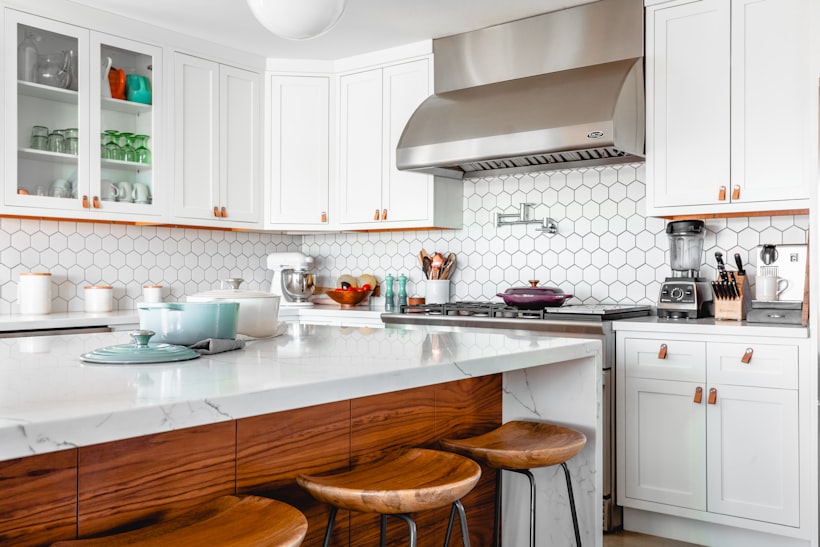
White kitchens have dominated interior design for decades, and they're not going anywhere. But the white kitchen of 2026 looks notably different from the cool, clinical all-white kitchen of the 2010s. The shift is subtle but significant: it's warmer, softer, and layered with natural texture.
Choose the Right White
There are hundreds of whites, and not all of them work in a kitchen. Cool bright whites (with blue or grey undertones) can look harsh under warm LED lighting and will fight with natural wood elements. In 2026, the whites that are working best are warm — think cream-whites, off-whites, and soft linen tones. Shaker Beige, All White, and Pointing from Farrow & Ball are client favourites of mine for good reason. They read as white but breathe with warmth.
Add Texture to Break the Flatness
A common problem with white kitchens is that they can feel flat and sterile. The fix is texture — lots of it. A handmade ceramic tile backsplash in off-white, a honed (not polished) stone countertop, linen roller blinds, raw timber open shelves, and a couple of woven baskets under the island will give a white kitchen the depth and life it needs to feel like a real, inhabited home rather than a showroom.
Pairing a bright cool-white kitchen with warm Edison-bulb lighting. The contrast between the blue-white surfaces and amber light creates an uneasy visual tension. For a white kitchen, use a neutral-white LED bulb rated 3000K–3500K, which renders the space accurately without the yellow cast.
Your Kitchen, Your Way
The best kitchen isn't the most expensive one — it's the one designed around how you actually live. Start with your pain points, decide what matters most (storage, style, space), and let that guide every decision from cabinetry to countertops.
Whether you're working with a tiny galley, a sprawling open plan, or something in between, 2026 has something genuinely exciting to offer in kitchen design. Take the ideas here, make them yours, and build something you'll love for years to come.
Browse More Design Inspiration